At North State Audiological Services, we conduct our initial hearing assessments with a straightforward four-step process. In our experience, this process yields the most accurate and personally relevant results through a combination of state-of-the-art hearing tests and a thorough interview, to ensure that we fully understand your lifestyle and your needs. Understanding your concerns and what’s most important to you in a better-hearing solution is one of our most important priorities.
The Effects of Hearing Loss and Sound Voids™ can be minimized if:
- Your problem is correctly diagnosed;
- You receive the right type of treatment; and
- You and your hearing care team are committed to solving the problem
Step One: The Interview
Purpose: To help your hearing care professional determine the extent of your problem and uncover any specific areas that may require further attention.
Some Typical Questions:
- Has anyone else in your family had hearing loss?
- Have you had any illnesses or injuries that might have affected your hearing?
- Have you taken any medications that might have affected your hearing?
- Have you been exposed to loud noises in your job or leisure activities?
Step Two: The Examination
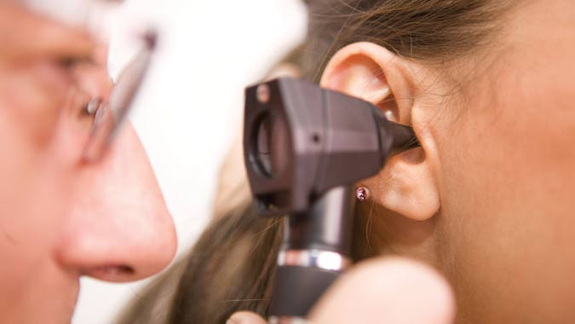
Purpose: To help your hearing care professional determine whether the hearing difficulty you are experiencing could be caused by an obstruction or damage to the ear canal or ear drum. Your hearing care professional will use a special instrument called an otoscope or video otoscope to inspect the outer ear.
Step Three: Hearing Tests
Purpose: To help the hearing care professional determine the nature of your hearing loss. Your Audiologist may include hearing tests like the following depending on his or her assessment of your needs.
- Audiometric pure tone evaluation to measure your hearing at different frequencies.
- Speech evaluation to measure how well you hear and understand ordinary conversation at different volumes.
- Immittance middle ear evaluation to measure how your ear drum and hearing react to varying degrees of air pressure.
- If you are suffering from a hearing loss, your results will be documented on an audiogram.
Step Four: Treatment Options
Hearing Aids
Hearing Aids come in a variety of designs and with a wide range of functions and features to address an individual’s specific needs. The most basic components include a microphone, an amplifier, a receiver, and (in the case of digital hearing systems) a small computer. The unprecedented effectiveness of modern digital systems comes from a powerful combination of professional expertise, software, and hardware.
Surgery & Implants
Devices surgically inserted into the ear to improve hearing, facilitate lip-reading, and make it easier to distinguish certain sounds. These are typically most helpful to deaf or profoundly hearing impaired people who cannot use hearing aids.
A few examples of surgical implants:
- Cochlear Implants
- Middle Ear Implants
- Bone-Anchored Hearing Aids
- Auditory Brainstem Implants
Assistive Listening Devices
Specialized technologies that help people with all degrees of hearing loss. These devices can facilitate improved face-to-face communication, reception of electronic media, telephone reception, and reception of important warning sounds and situations.